01
INITIALS
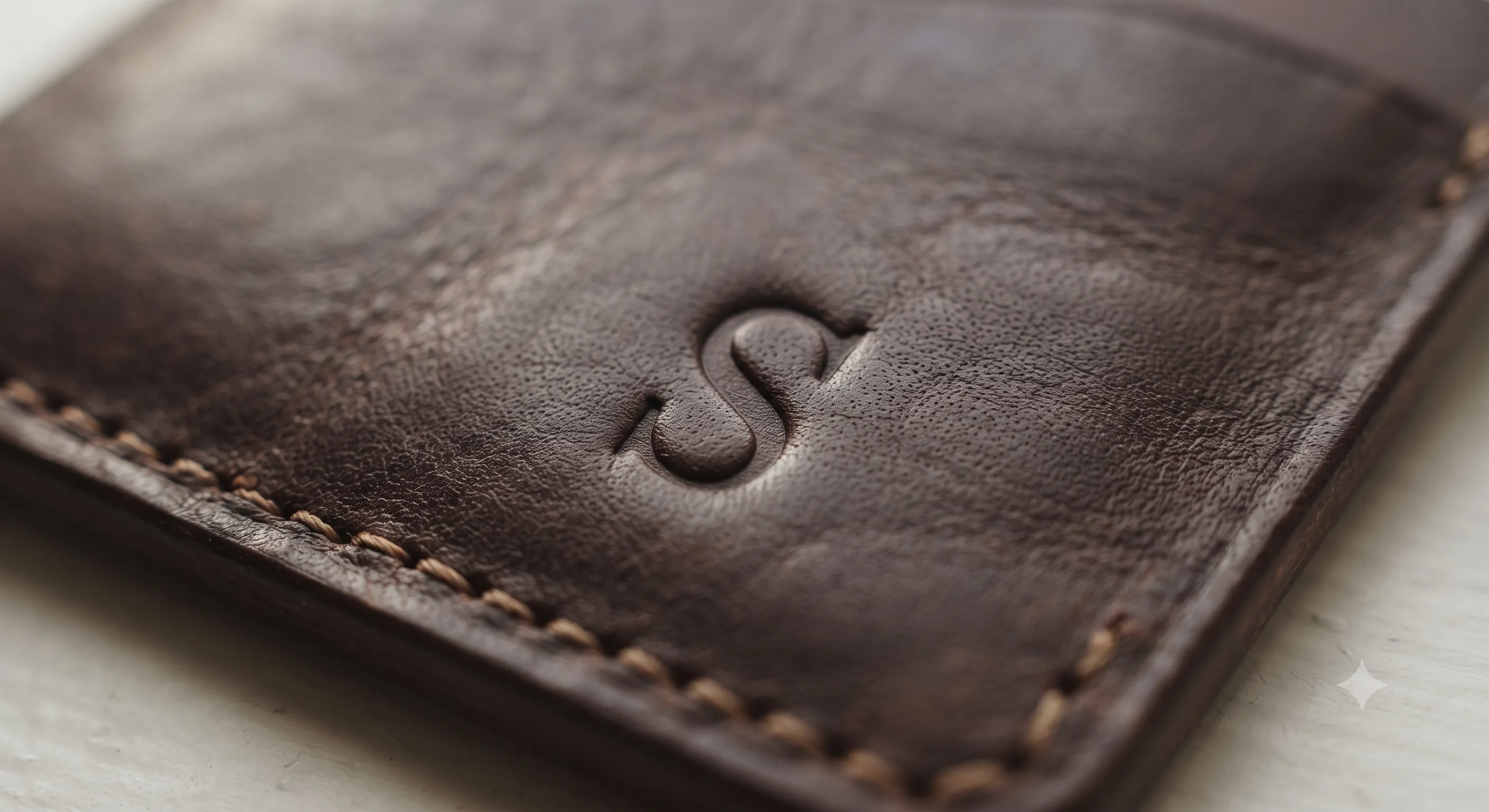
A Small Mark Of Your Own.
A single initial can be enough to make an everyday leather piece feel distinctly personal.
Personalisation gives a leather piece another layer of meaning. From initials and names to monograms and considered brand marks, each detail is developed in relation to the leather, its construction and the person it is made for.
A considered detail can make a well-made piece feel distinctly its own. Personalisation can be subtle — an initial, a name, a monogram or a quiet mark created for the recipient.
A detail can be quiet and still be unmistakably yours.
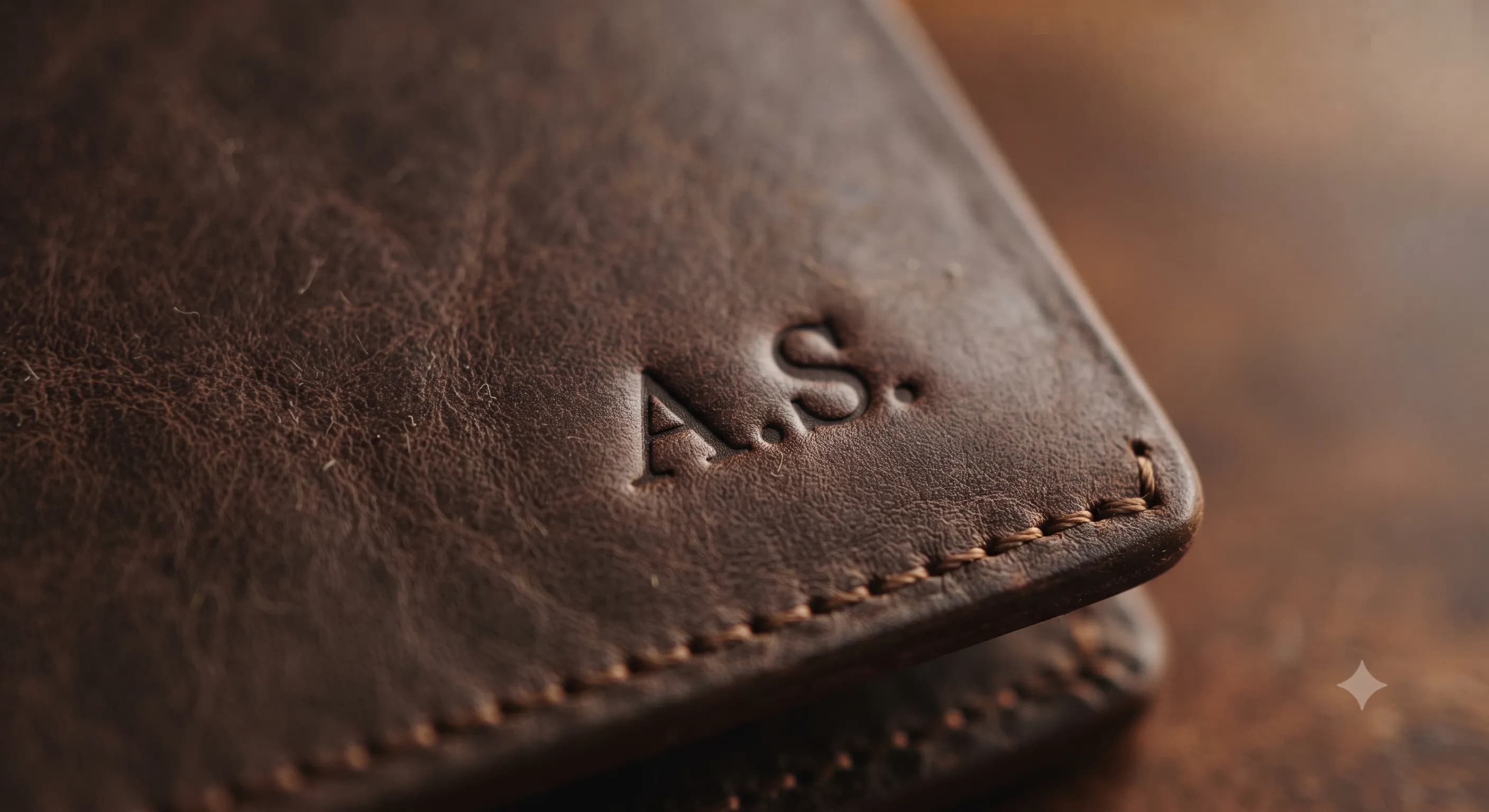
A considered mark can change how a piece feels without changing what it is.
A single initial can be enough to make an everyday leather piece feel distinctly personal.
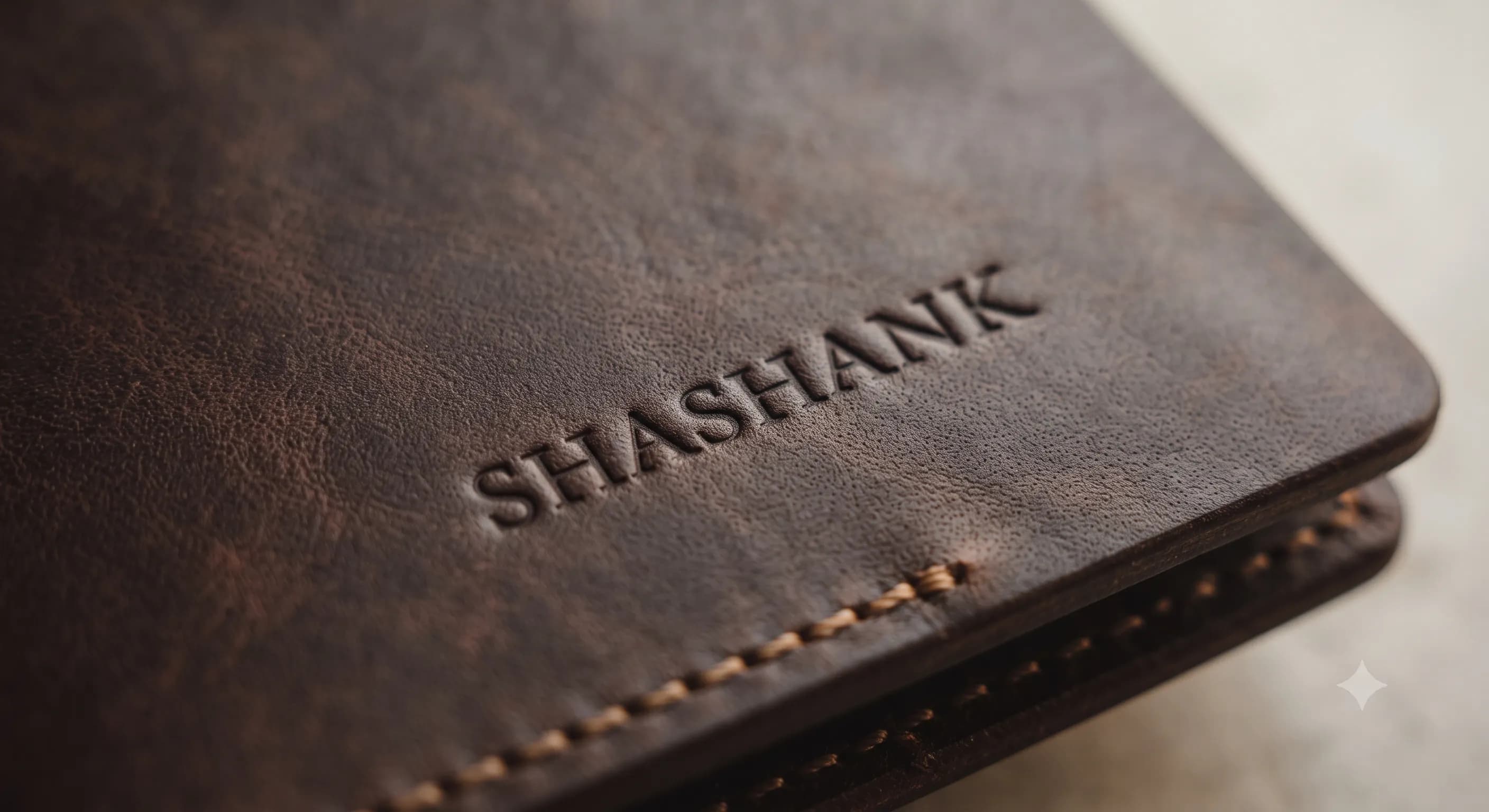
A name can give a piece a clear sense of ownership without overwhelming the character of the leather.
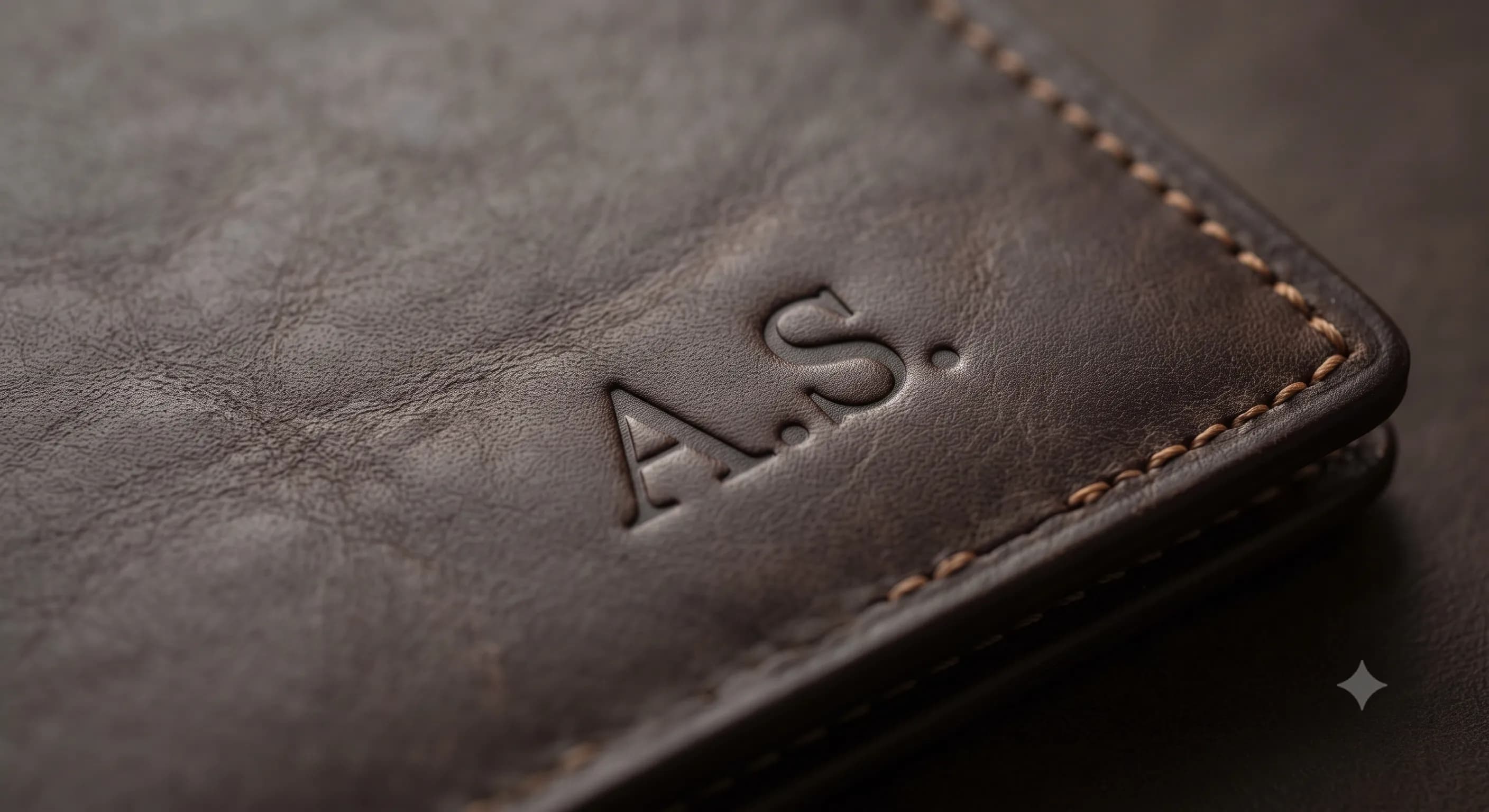
A considered monogram can introduce identity while remaining part of the object's overall character.
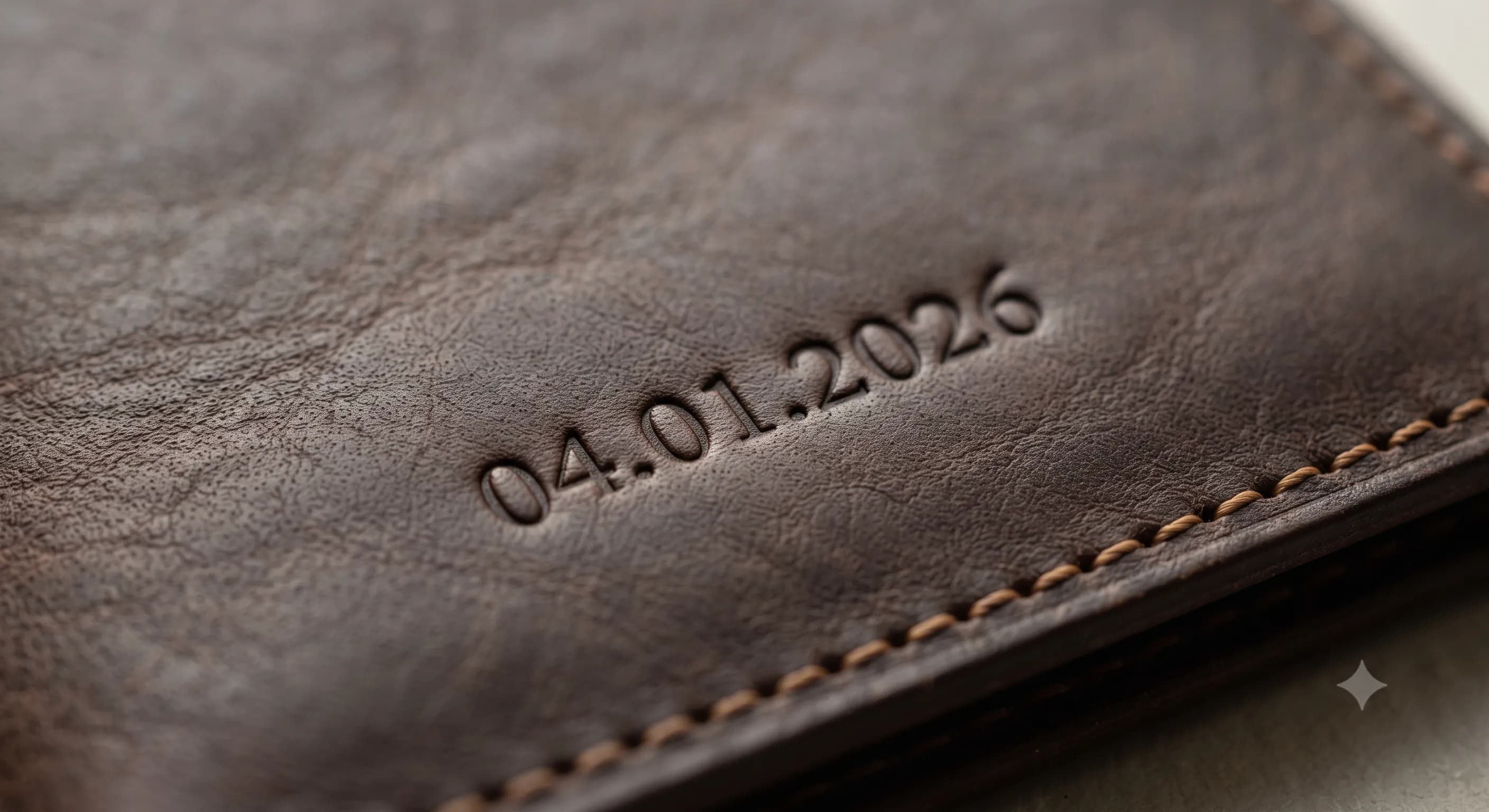
A meaningful date or short word can turn a leather object into a quiet reminder of a person, place or moment.
Sometimes a single initial is enough. A considered monogram can give a handcrafted leather piece a quiet sense of identity without taking away from the character of the material.
THE MARK SHOULD BELONG TO THE PIECE.
A name, short phrase or meaningful word can turn an everyday leather object into something more personal — a quiet reminder of a person, place or moment.
A personal detail can become part of what we carry every day.
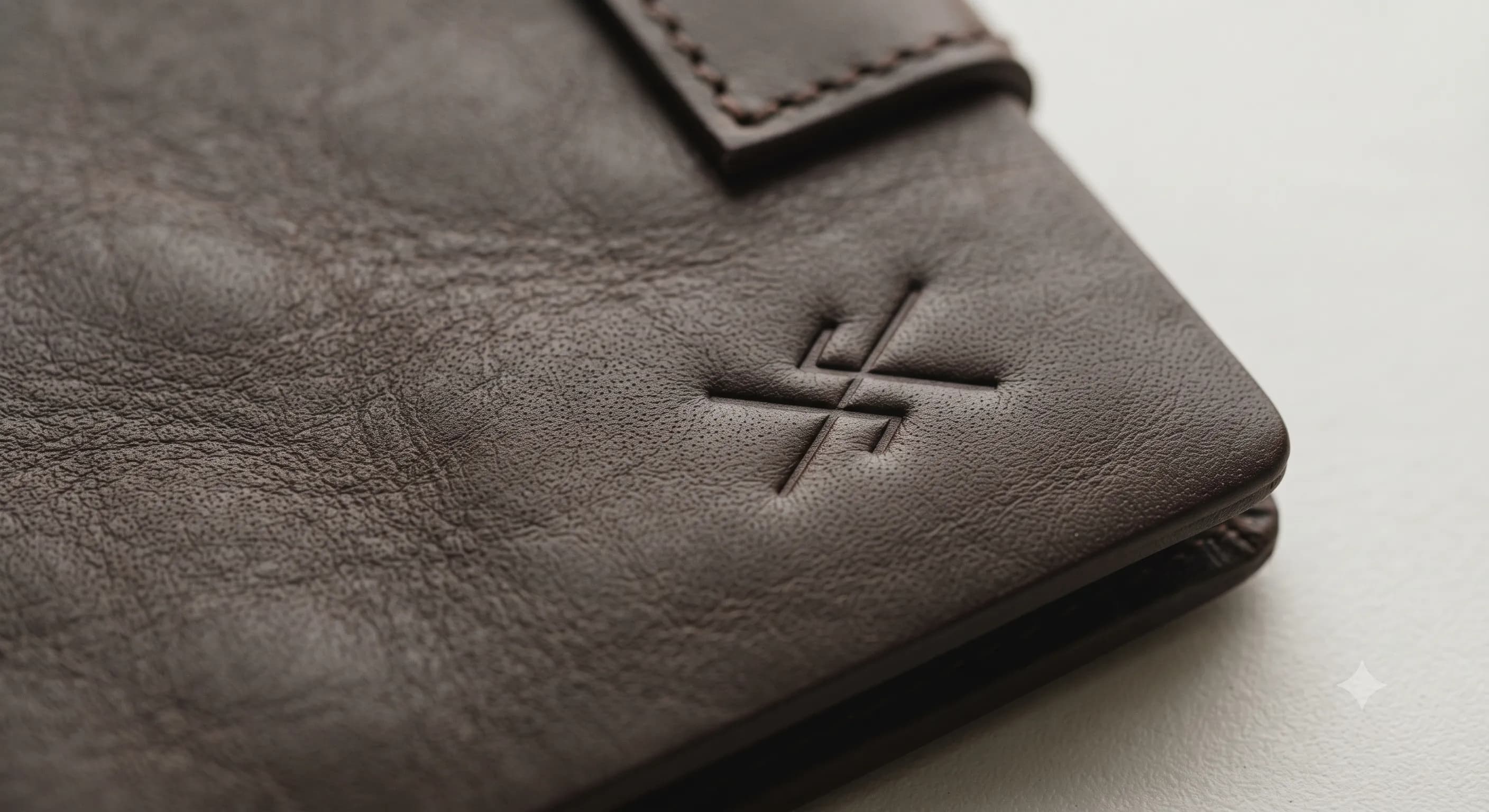
A brand mark can become part of a leather piece without overwhelming the object. Placement, scale and treatment are considered alongside the material and construction.
The mark remains proportionate to the piece.
The treatment can follow an existing brand identity.
Placement and scale are considered alongside the leather and construction.
Where a mark sits can change how it feels. Scale and placement are considered alongside the piece itself.
The same mark can feel different depending on the leather, finish, colour and surface character. We consider the material before deciding how a personal detail should appear.
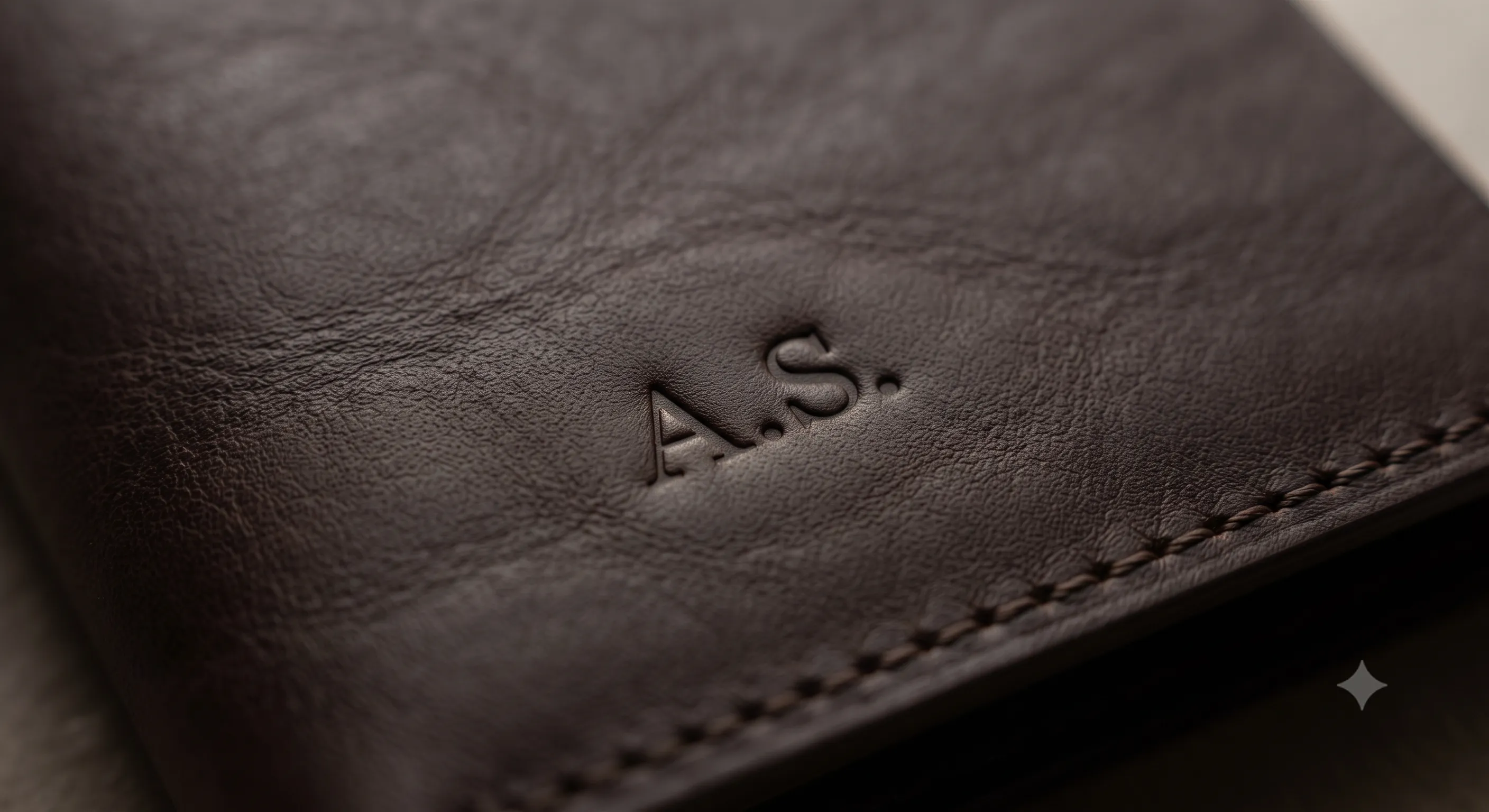
A deeper leather tone allows a subtle personal mark to remain understated and close to the material.
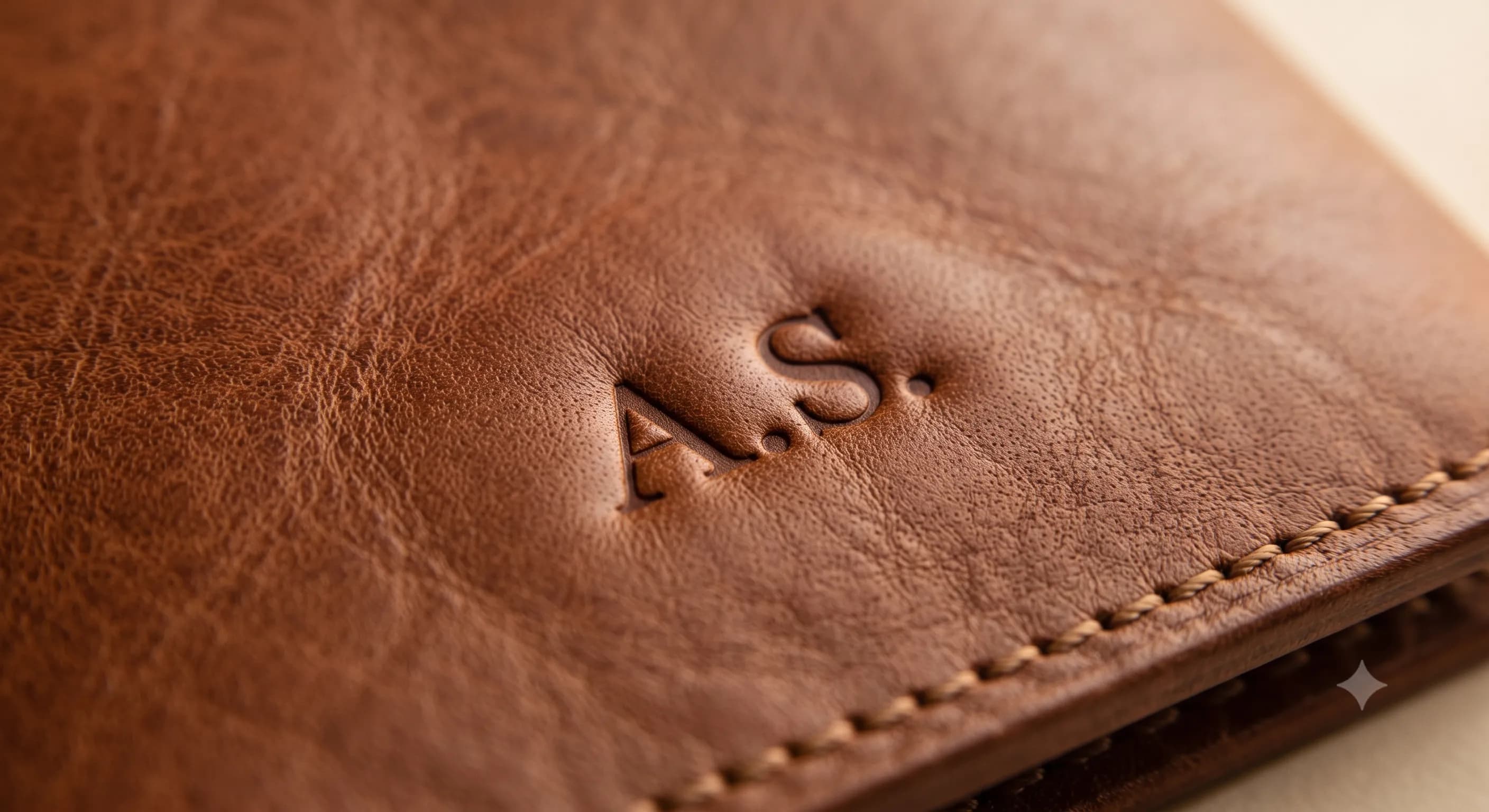
Warmer leather can give a personal mark a slightly clearer presence while retaining the natural character of the material.
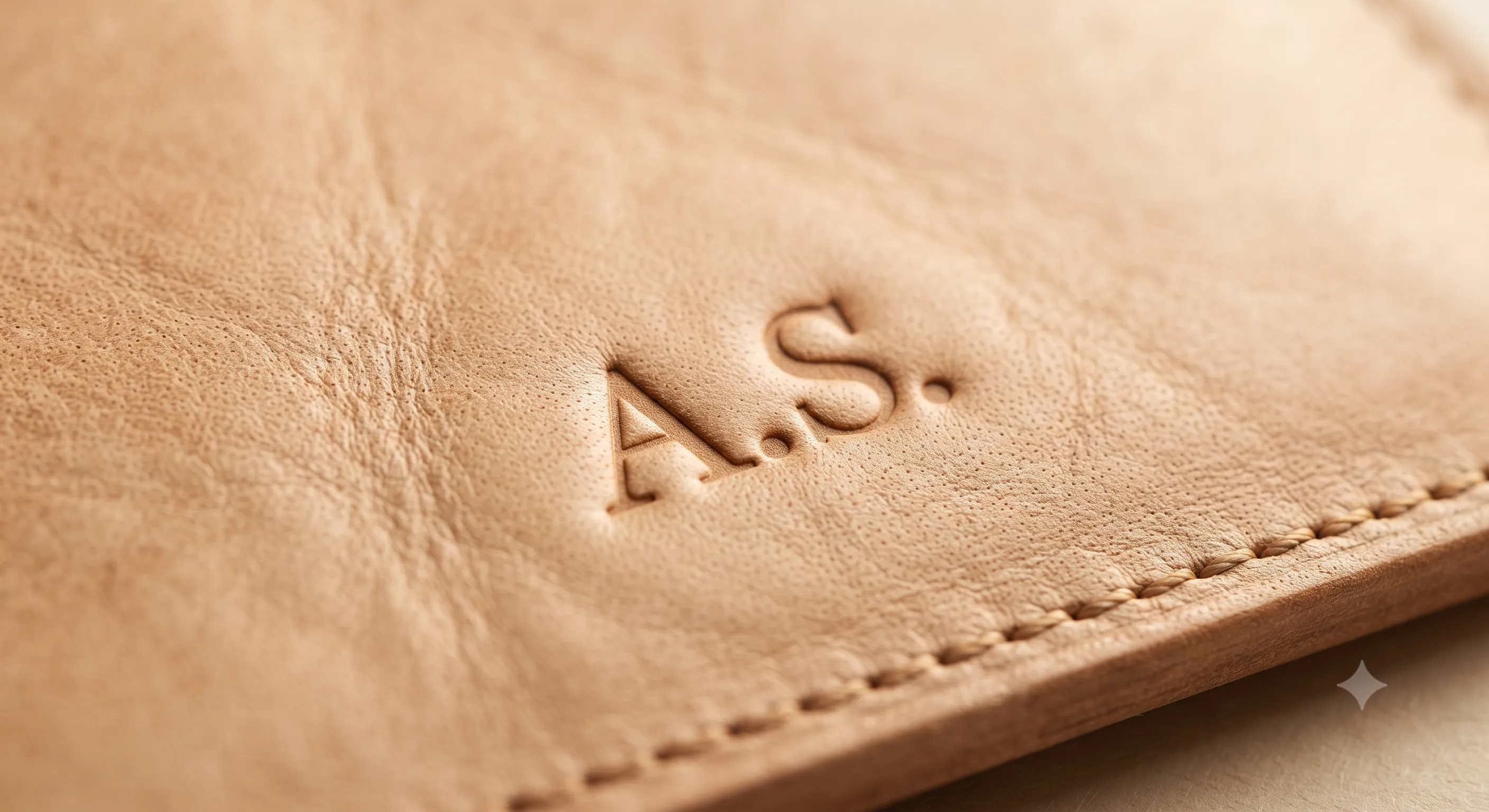
On lighter leather, the same detail can create a different visual relationship with the surface.
Personalisation should respond to the leather — its colour, grain, finish and character — rather than treating every piece the same.
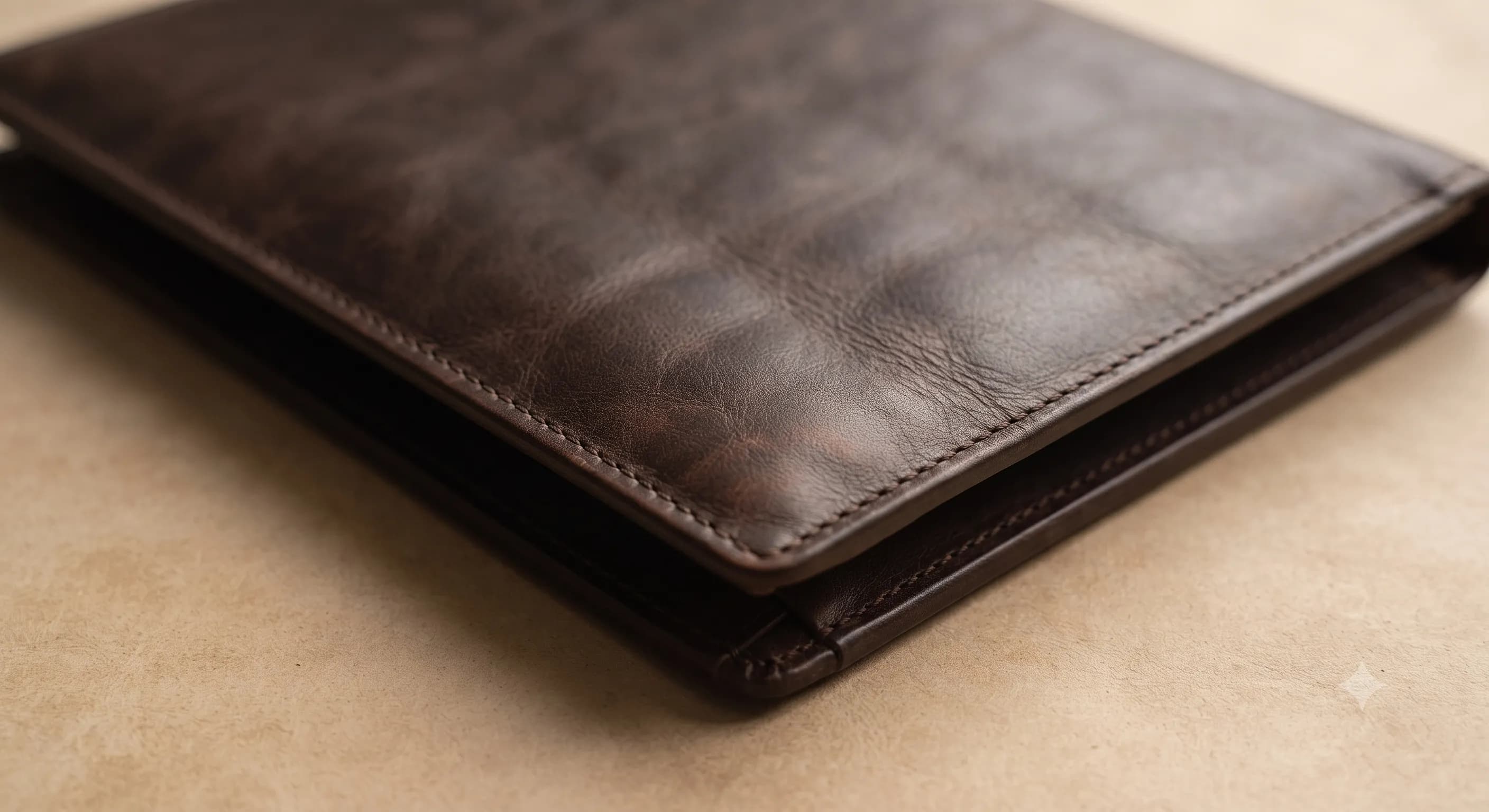
Personalisation should add meaning, not simply occupy space. Sometimes the most considered choice is to leave the material alone.
Personalisation is considered in relation to the leather, the piece and the detail being added. The method should feel appropriate to the material rather than simply applied to it.
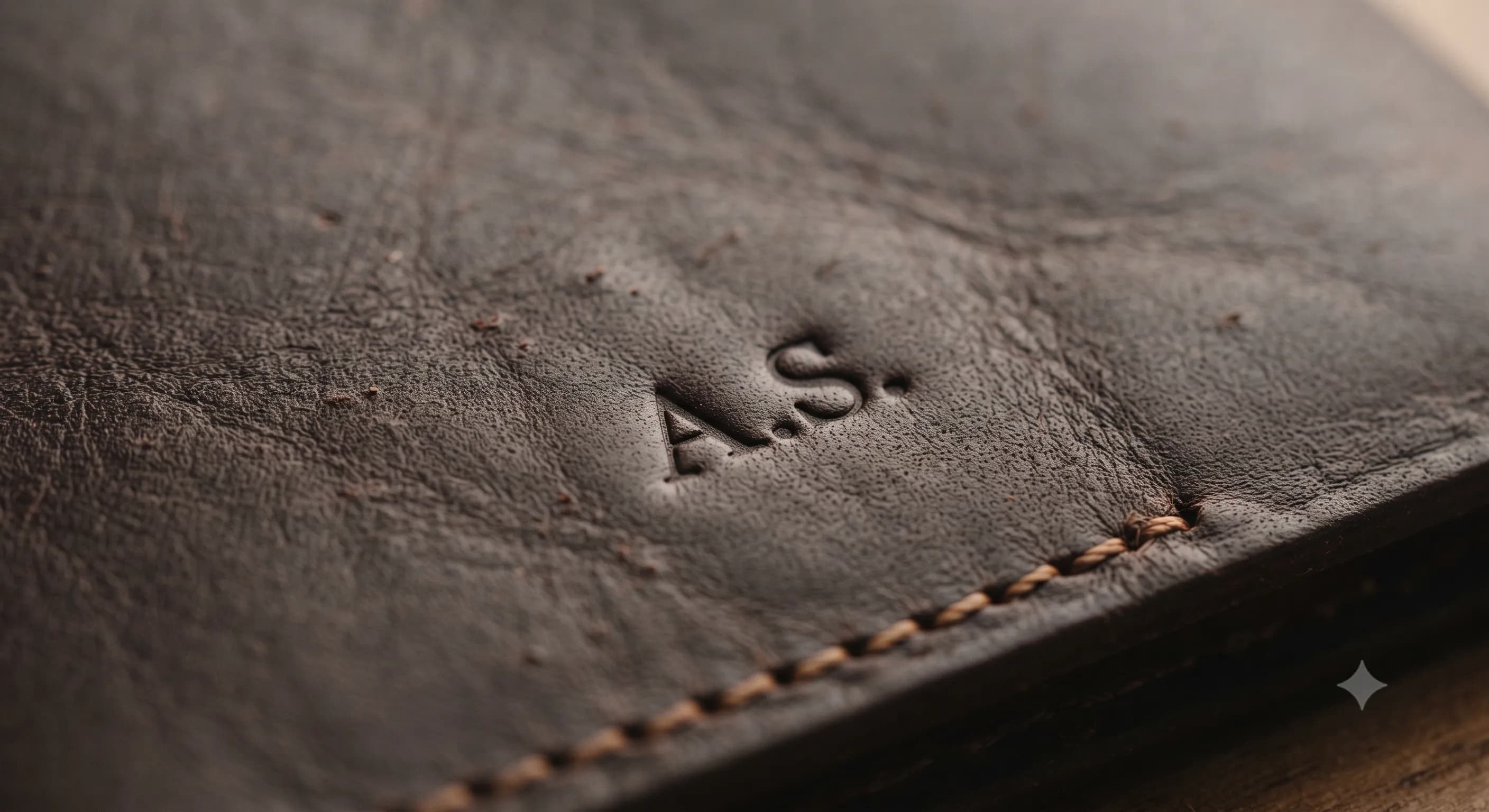
A subtle impression pressed into the leather, allowing the personal detail to remain part of the material rather than sitting on top of it.
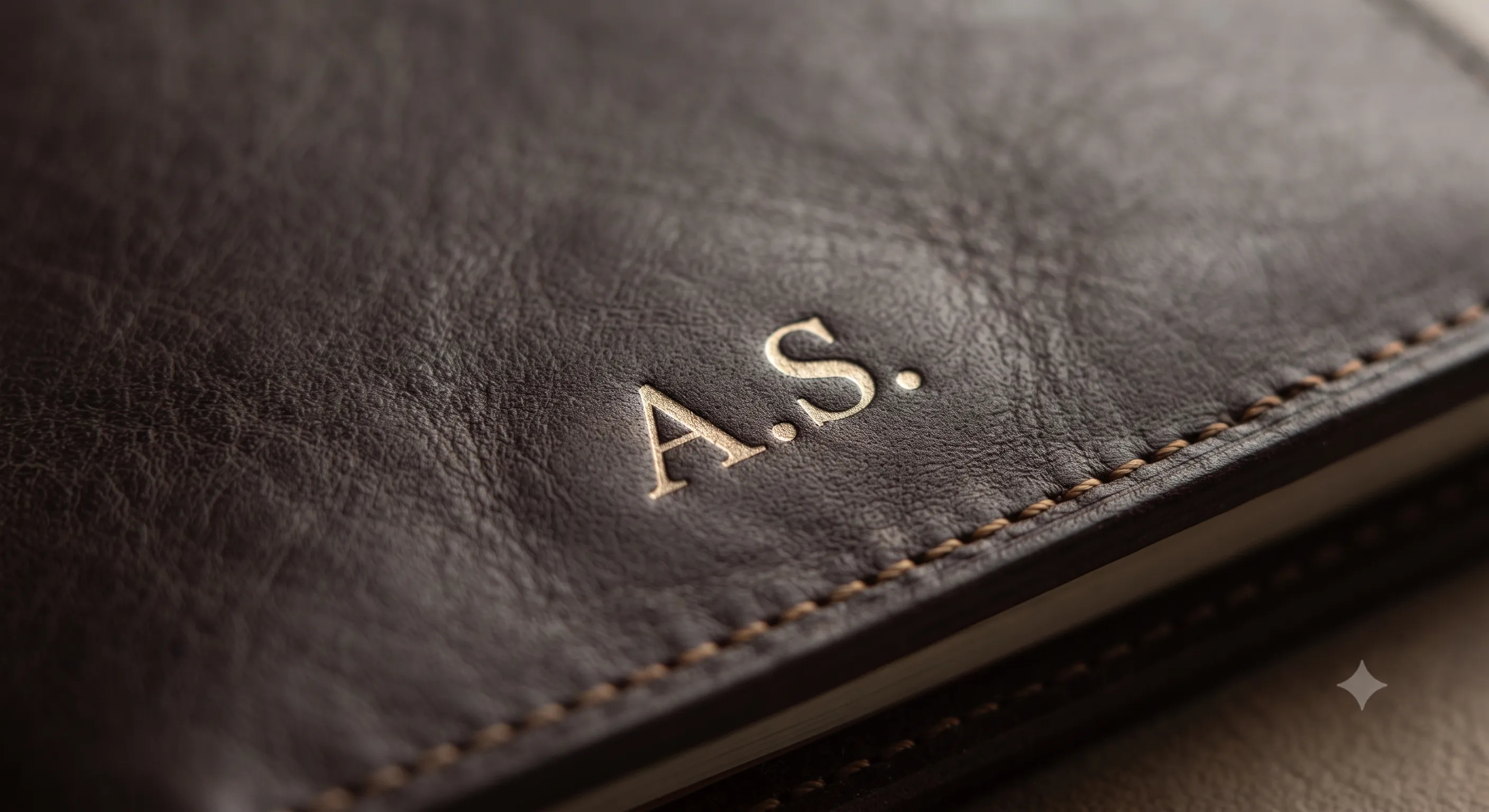
Where a more visible personal detail is appropriate, colour or foil can create a clearer expression while remaining considered.
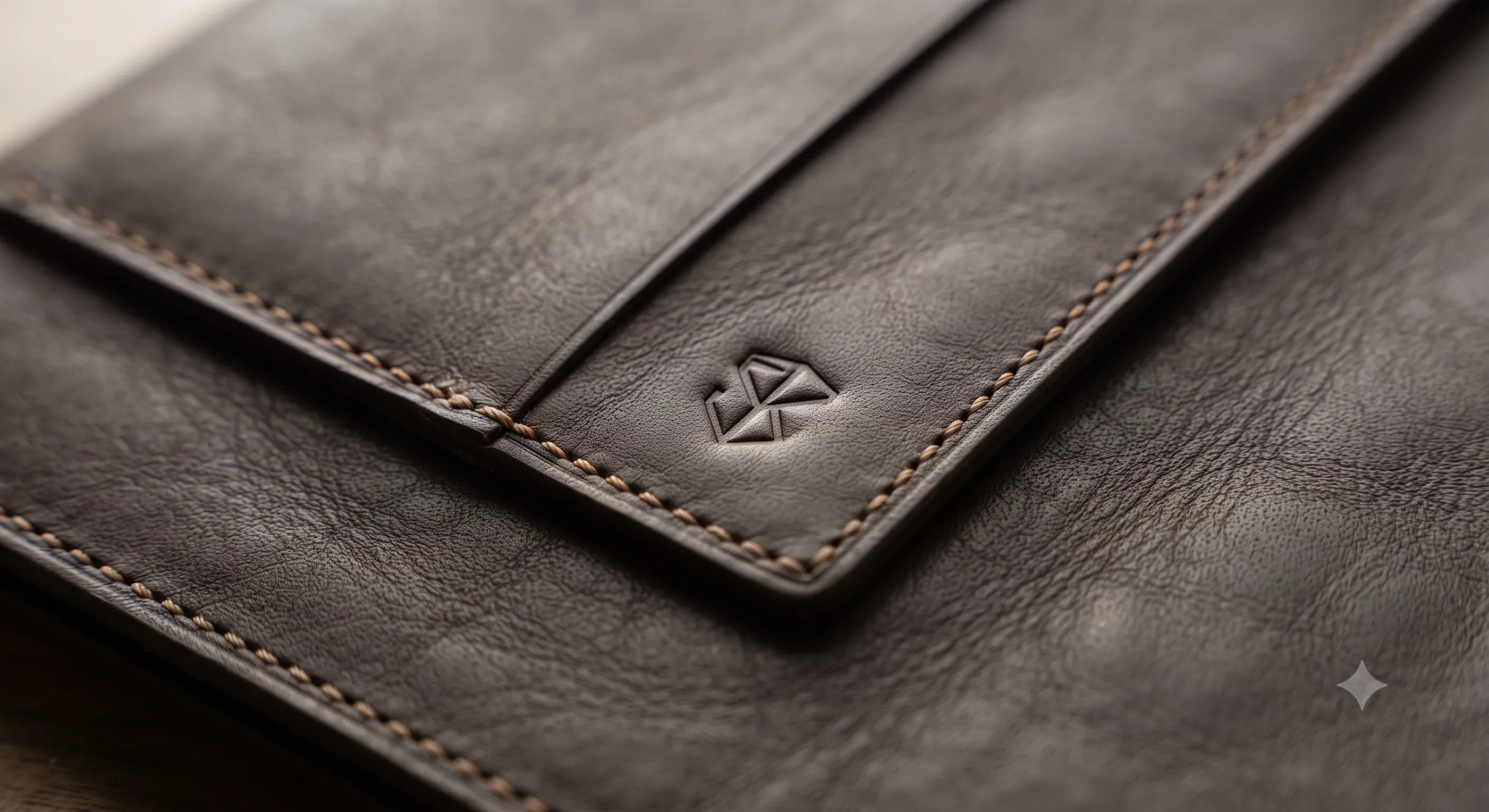
For more specific requirements, the mark, scale or placement can be considered around the character and construction of the piece.
The right approach depends on the leather, the piece and the character we want the finished detail to have.
When a commission is created for a group, the pieces can share a common language while remaining thoughtfully made. Materials, personalisation and finishing can be considered across the collection as a whole.
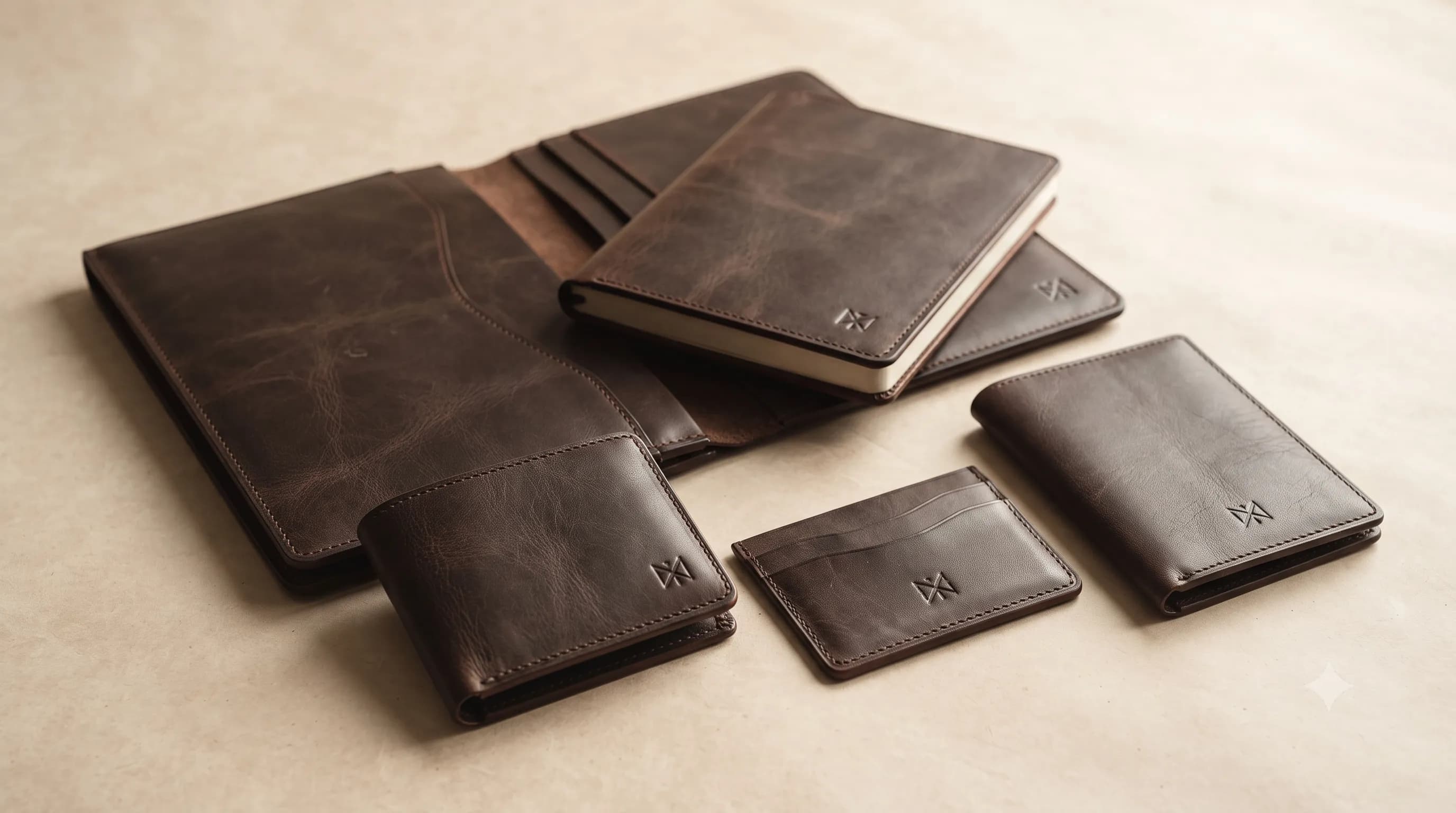
The collection shares a considered material and finishing language.
Personalisation can remain visually consistent across multiple pieces.
Each object can still serve its own function and recipient.
A group commission can feel cohesive without becoming uniform.
Personalisation begins with a detail worth considering. From the initial idea to the final mark, each decision is made in relation to the leather, the piece and the person it is made for.
What should the detail mean?
Material, colour and finish are considered.
Scale and position are decided around the piece.
The final mark is carefully applied to the leather.
What should the detail mean?
Material, colour and finish are considered.
Scale and position are decided around the piece.
The final mark is carefully applied to the leather.
A few practical questions, before we make the detail yours.
Tell us about the piece, the person or the idea behind the detail. We’ll consider the material, placement and finish before suggesting what works best.